


What is protein?
Protein is one of the main food groups (or ‘macronutrients’) that make up a balanced diet. It acts like a building block for lots of different systems in the body. Protein helps to build and repair muscles, as well as making up major components of the immune system and different types of signalling molecules known as hormones. In times where the body does not have enough carbohydrates and fats on board to fuel itself, protein can also be used as an energy source as a last resort. In addition to protein, a nourishing diet should also include a balance of carbohydrates, beneficial fats and plenty of vegetables.
How much protein should I be eating?
In recent times, a higher protein intake has become more popular as a method to achieve and maintain weight loss. Studies do suggest that eating more protein-rich foods can reduce hunger and cravings after meals, and increase satisfaction or ‘satiety’ after eating, which can be helpful when trying to improve weight.
The recommended daily amount of protein will vary between individuals based on their body weight. In those who are trying to achieve weight loss, aiming for a higher protein intake or taking GLP-1 medications, approximately 1.2-1.6g/kg/day is suggested as an optimal intake, depending on age, ideal body weight and activity level. Those who are also exercising frequently, particularly with resistance-type training, should be aiming for enough protein intake to help preserve and build muscle.
This looks like a minimum of 90g protein per day for a 75kg adult and 120g protein per day for a 100kg adult.
Protein intake should ideally be spread across the day rather than being concentrated within one meal, and come from a variety of sources if available. One way to do this is to ensure that you include a good protein source within each balanced meal, then to have easy snacks that can act as ‘protein top-ups’. Some people find that meal planning or preparing portioned food in advance can help with this.
Aiming for around 30g of protein per meal can help to ensure that you are getting enough throughout the day.
This list shows common sources of protein, including some non-meat and plant-based options, that are particularly helpful for those who are looking to lose weight or eat a reduced-calorie diet. Checking the labels of your foods can help give you more information about protein and calorie content per portion.
- Lean white meat - such as chicken and turkey. Low-fat mince or breast cuts are lower in calories
- Fish and seafood - white fish, tuna and shellfish are very lean protein sources. Oily fish such as salmon, mackerel and sardines are higher in calories, but also contain other important nutrients such as omega oils
- Dairy products, including cheeses, milk and yoghurt - lower fat options such as skimmed milk, reduced fat cheddar, cottage cheese and ricotta give good protein sources at lower calories. Greek yoghurt is usually higher in protein than other types of yoghurt
- Eggs - 1 large, boiled egg contains around 6g protein and can be a quick and convenient snack or protein ‘top-up’
- Soya - includes products such as tofu and tempeh, or dairy alternatives such as soy milk, soy yoghurt, or soy cheese. These are an excellent plant-based protein source and are versatile to add to meals or act as a meat substitute in recipes
- Beans and pulses - such as lentils, chickpeas and peas are a great way of building in an extra protein top-up to a meal (with the added benefit of also increasing fibre and other plant-based nutrients). Of note, edamame beans are particularly high in protein compared to other beans
- Nuts and seeds also contain healthy fats (so can be higher in calories), and measured portions can be excellent for topping up protein and adding extra fibre and nutrients to your diet
- Protein/whey powders - can be a convenient option to add to smoothies and recipes to boost the protein content. Try to find a 100% whey protein powder without excess additives, flavourings or sugars
The following table gives some examples of approximate portions that give 30g of protein:
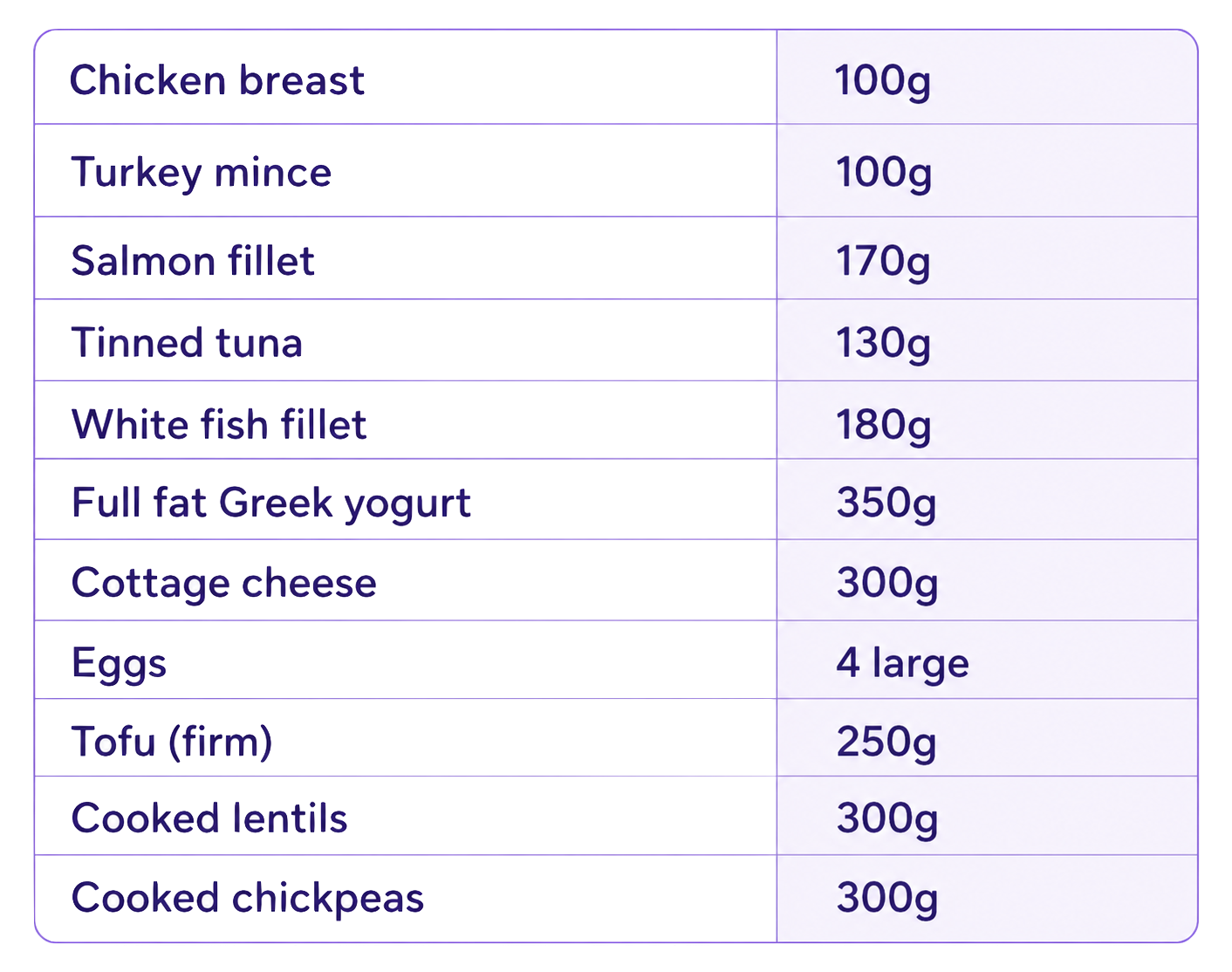
Protein intake chart
Those who are taking GLP-1 medications are more likely to struggle with eating enough protein for their body’s needs unless they focus on this with their support team. Our experts at Genwell explain why protein intake is so important for maintaining healthy muscle when taking weight-loss medications.
What our clinical experts say
At Genwell, we take a multidisciplinary approach to GLP-1 care, combining medical oversight with nutrition and behaviour change support. We know that weight loss without the right nutritional strategy can lead to muscle loss, which is why supporting adequate protein intake is a key part of protecting muscle mass, maintaining strength, and promoting long-term metabolic health
Bogomila Tosheva
Genwell reflections
- Protein contributes to maintaining and building muscle mass, but also has other important functions in our body, which are crucial to achieving health and wellness
- Making sure that you are eating enough protein as part of a balanced diet can be a key to success in your wellness journey, particularly if you are taking a GLP-1 medication
- Getting individual and specialist advice can help you work out how much protein you should be eating, as well as easy-to-follow strategies to achieve this
- Checking the nutritional information on the food labels or packaging can help you to find out how much protein is in that product, and how much constitutes a ‘portion’ according to your own protein needs
Of note: Caution should be taken with higher protein diets in individuals with certain medical conditions. If you think this might affect you, it is important to speak to a doctor or dietician before starting a high-protein diet.