


What are GLP-1 medications?
There’s a lot of talk about GLP-1 medications right now – on the news, on social media, in conversations down the pub or at your local weight loss club. With so much talk, it's important that you can cut through to the true facts and understand what the science could mean for you. Here, we’ll try to make it all clear so you can make better sense of what you’re watching, reading and hearing.
We’ve used one term already: “GLP-1 medications”. But what does it really mean?
When we talk about GLP-1 medications, we mean medicines like Wegovy or Ozempic that mimic the natural hormone GLP-1, or, in the case of Mounjaro, that mimic both GLP-1 and another hormone called GIP. It’s got complicated already! Stick with us, and we’ll explain…
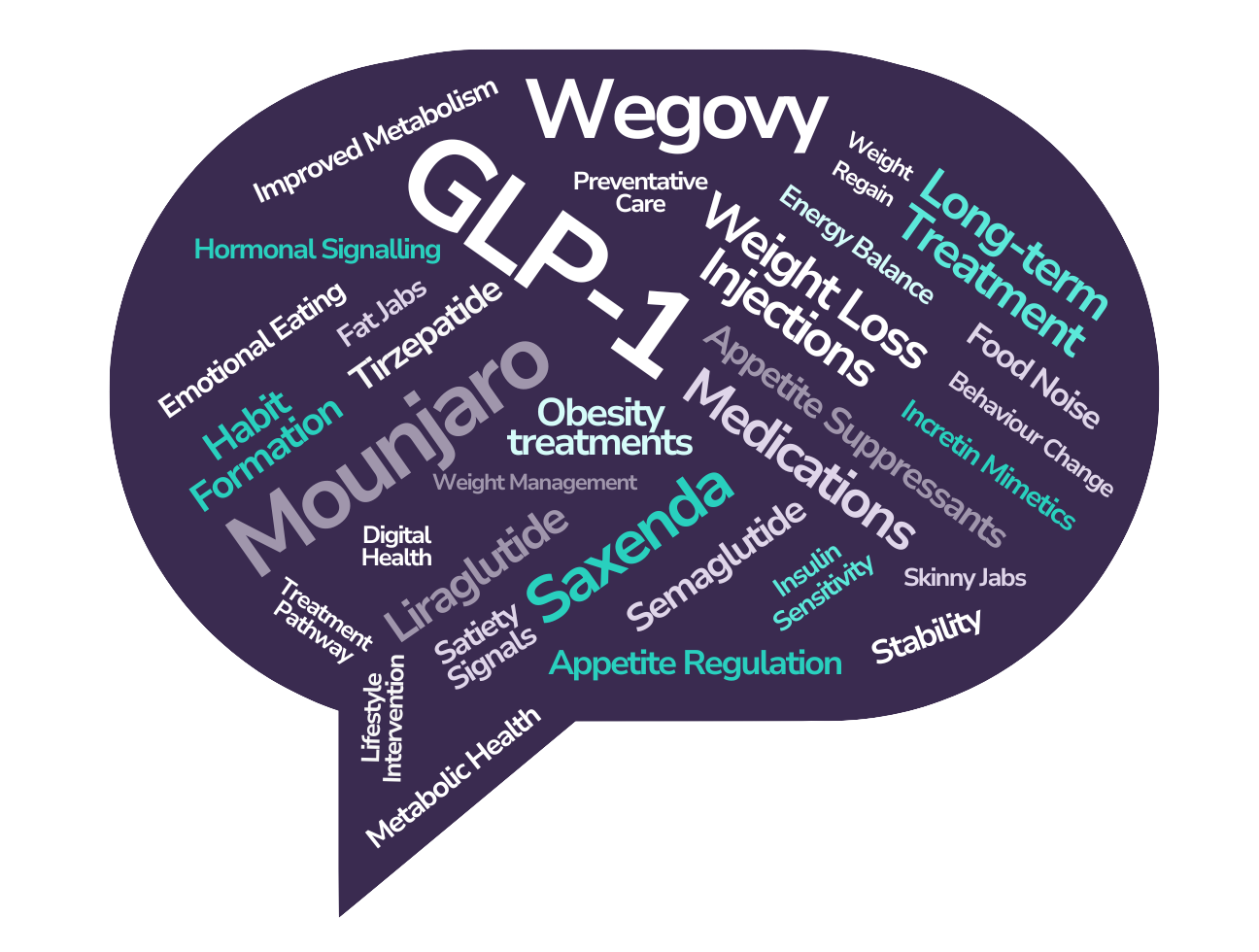
Word cloud of medical weight-loss terms
What are GLP-1 and GIP?
GLP-1 (or Glucagon Like Peptide-1 to use its full name) and GIP (or Glucose-dependent Insulinotropic Polypeptide) are hormones that our bodies make every time we eat. They are important in how the body responds to eating food, including managing blood sugars and sending satiety (fullness) messages to the brain.
Medications that mimic these hormones are actually called “GLP-1 receptor agonists” or “dual GIP/GLP-1 receptor agonists” (which, put simply, just means that they can trigger the same messages as the natural hormones) - but that really is a mouthful to say, so that’s why you’ll find lots of people using terms like “GLP-1s” or “GLP-1 medications” instead.
Let’s dig into why a medicine that can mimic these hormones is useful in managing overweight and obesity.
Where did it all start?
It might seem like these treatments have appeared from nowhere, but you may be surprised to know that GLP-1 medications have been around for 20 years! The first GLP-1 medications were developed for people with diabetes to help control blood sugar. But as scientists saw that people using these treatments were also losing weight, they started to explore how they could be used to help with overweight and obesity.
More was learned about how GLP-1 medications work, and we now know that they act on different parts of the body, including the stomach, slowing down how quickly food is digested and the brain, sending messages to the areas that deal with hunger and fullness. This can help people reduce the amount of food they eat by:
- Increasing feelings of fullness
- Decreasing feelings of hunger
- Decreasing food cravings
This means that people using these medications eat fewer calories, and combined with increased exercise, studies have shown dramatic weight loss results where people lost up to 15–20% of their body weight.
Today, we have three different GLP-1 medications available in the UK that can be used for overweight and obesity: semaglutide, tirzepatide and liraglutide. You might not recognise these drug names because the brand names are more commonly used, so let’s take a look at each in a bit more detail. But before we do…
Which GLP-1 medications can be used for weight loss and obesity?
First, let’s talk a bit about medicines in the UK. Before medicines are made available to use, they are assessed by the UK medicines regulator, the MHRA (Medicines and Healthcare products Regulatory Agency). Once the MHRA are happy that the medicine is safe and effective to be used in a specific way, a license is given. This means that medicines can only be used under the conditions outlined in their license – this is really important to understand when we talk about how certain brand-name medicines can or cannot be used.
Doctor prescription consultation
Semaglutide (you may know it as Wegovy)
Semaglutide is a GLP-1 receptor agonist. There are three brand-name medicines that contain semaglutide in the UK: Wegovy (an injection), Ozempic (an injection) and Rybelsus (a tablet).
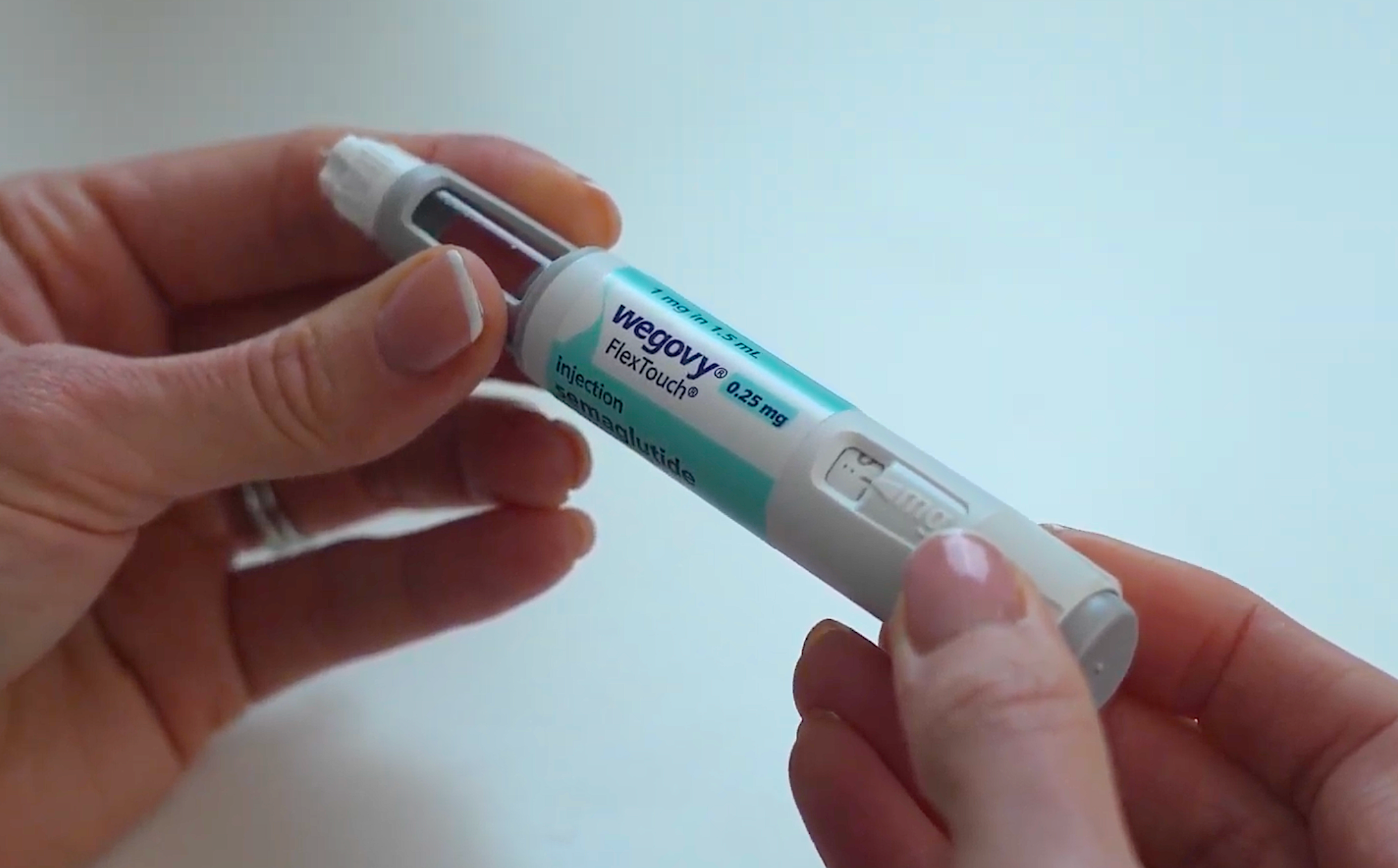
Wegovy is the only one of these three medicines that is licensed to treat people with overweight and obesity. It can also be used to reduce the risk of having cardiovascular events (e.g., heart attack or stroke) in adults with overweight or obesity and cardiovascular disease. Both Ozempic and Rybelsus are used to treat people with diabetes.
Tirzepatide (you may know it as Mounjaro)
Tirzepatide is a dual GIP/GLP-1 receptor agonist. There is just one brand containing tirzepatide in the UK: Mounjaro (an injection). It is used for both weight management and diabetes management.
Liraglutide (you may know it as Saxenda)
Liraglutide is a GLP-1 receptor agonist. There are lots of brands of liraglutide injection available in the UK, for weight management and diabetes management, including Saxenda for weight management.
You may find liraglutide injections are mentioned less often because these injections need to be given daily, perhaps making them a less appealing option.
The use of GLP-1 medications for weight management
Two commonly used brands of GLP-1 medications used to treat overweight and obesity are Wegovy and Mounjaro. The only way to access Wegovy or Mounjaro is to be prescribed treatment by a healthcare professional. There are a few different ways this can happen:
Treatment provided by the NHS
GLP-1 medications can be prescribed on the NHS for people with overweight and obesity, but prescriptions (for Wegovy or Mounjaro) are limited to those who have a much higher risk of weight-related health conditions first.
Treatment provided by private prescription
GLP-1 medications can be prescribed to people with overweight or obesity by a healthcare professional in a private setting. This includes online healthcare providers such as Genwell.
You may find there are some differences in who can be prescribed treatment between different providers. At Genwell, we aim to provide an inclusive weight management programme, and so we will consider the following groups for treatment:
- Adults with a BMI [body mass index] of 30 kg/m2 or more
- Adults with a BMI between 25 and 30 kg/m2 if they have at least one other weight-related health problem (e.g., high blood pressure, high cholesterol) or if they are from a higher-risk ethnic group. See here for details of higher-risk ethnic groups and here for a full list of weight-related conditions.
Note that the decision to prescribe a GLP-1 medication is one that a healthcare professional will only make if it is appropriate for the individual, after considering all relevant information. At Genwell, a consultation with a doctor may be needed to assess suitability for treatment.

Healthcare professional writing a prescription
Taking GLP-1 medications without a prescription is not safe
All GLP-1 medications are prescription-only medicines in the UK; this means you must have a prescription from a healthcare professional to get them.
However, you might have heard about, or been offered, GLP-1 medications without a prescription, perhaps from a beauty salon or via social media. This option might seem easier and may be cheaper than getting a prescription from a healthcare professional, but there are some things you should be aware of:
- Firstly, it is illegal to sell medicines like these without a prescription; you should never take GLP-1 medications without speaking to a healthcare professional, who will consider whether they are safe and suitable for you to use
- Secondly, these products may pose a danger to your health
- They could be fake medicines that look a lot like the real brands
- They could be different types of products, e.g., sold as a powder and liquid that need to be mixed together, which can be dangerous.
- They may contain harmful toxins.
Whatever they look like, unlicensed medicines can pose a danger to your health. Remember, the MHRA assesses all medicines to make sure they are safe and effective; unlicensed medicines have not been assessed, do not follow the same strict rules, and can cause serious health risks.
Take care when choosing your weight management provider; always make sure you have a consultation with a healthcare professional before being prescribed GLP-1 medications, and get them from a legitimate pharmacy.
Are GLP-1 medications safe to use?
GLP-1 medications are generally considered safe for most people; however, as with all medicines, there will be cases where GLP-1 medications should not be used, and that is why a consultation with a healthcare professional is essential before starting treatment.
The most common side effects of GLP-1 medications are digestive– affecting the stomach and intestines – like nausea, diarrhoea, constipation and vomiting. But these are usually not serious and are more likely to happen in the first few weeks after starting treatment or when upping your dose, until your body adjusts.
Key messages
GLP-1 medications have revolutionised weight management in recent times. Initially developed for people with diabetes, these treatments have shown impressive levels of weight loss, achieved by people with overweight and obesity, in clinical trials.
- GLP-1 medications mimic the actions of naturally occurring hormones, released after eating, to increase feelings of fullness, reduce hunger and reduce cravings
- Wegovy (semaglutide) and Mounjaro (tirzepatide) are two commonly used brands licensed for weight management in the UK.
- Treatment with GLP-1 medications should only be started when prescribed by a healthcare professional; this can be on the NHS or using a private service.
- Only legitimate treatments, obtained from a registered pharmacy, should be trusted; Patches and supplements claiming to have GLP-1-like effects have not been confirmed to be safe or effective.
Disclaimer: This article relates to adults and is for general information only and does not replace personalised medical advice. If you’re considering treatment, please contact our care team.