


What is ‘yo-yo dieting’?
How many people work hard to lose weight, only to put it back on again? According to studies, the majority of us who lose weight end up regaining it over time. This can happen again and again over time, causing body weight to fluctuate in a pattern called ‘yo-yo dieting’ or ‘weight cycling’. The graph below shows a typical body weight journey for someone who is experiencing this pattern with multiple periods of weight loss and regain.
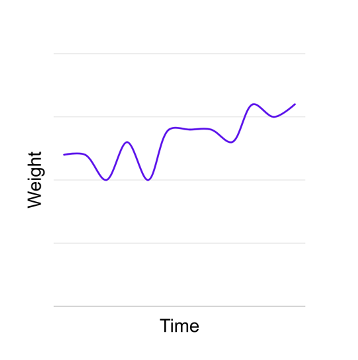
Typical pattern of weight loss and regain associated with yo-yo dieting over time
Planned weight loss often follows a decision to change lifestyle habits such as eating healthier or exercising more. After the initial weight comes off, there is a turning point where most people stop losing weight. At this time, some people will find that their weight stays stuck where it is, or others may find that the weight starts creeping back on. Maybe there has been a change in life that makes a new diet or exercise less important or more challenging? Pressures at work, busier periods at home, family stresses, or simply losing motivation to maintain all the new changes can all come into play. But we are now understanding that weight regain is down to more than this.
Weight cycling is not caused by a lack of willpower, but biological systems at play which stack the odds against us.
Why is this important? Well, in addition to overweight and obesity having harmful effects on our health, we are learning that there are more risks associated with these weight cycling patterns, and that yo-yoing weight can impact our bodies in more ways than previously thought. Here, we are going to outline what is really happening in our bodies when we undergo weight cycling and why this seems to happen to so many of us.
Why does this pattern happen?
Let’s stop for a minute and think about what overweight and obesity actually are. For lots of people, it is something that has affected them their whole lives. Healthcare is now recognising that overweight and obesity are long-term medical conditions that are not resolved with ‘quick fixes’ but rather require ongoing management and treatment, in a similar way to many other chronic health problems, such as type 2 diabetes or high blood pressure.
This approach is needed for a number of reasons…
'Metabolic set point theory’
An increasingly popular concept in overweight and obesity research is ‘Metabolic set point theory’. This theory suggests that over a period of time, the body gets used to being at a certain weight. If a lot of weight is then lost over a relatively short period of time,e the body will try to compensate for this in a few different ways, such as increasing appetite, to get the body back to its ‘set weight’. This is known as ‘obesity memory’. Whilst our genes play a role in determining what this ‘set weight’ is for each person, it is also affected by our environment and behaviours, so this can change at different points in our lives. This explains why those who have suffered from being overweight or obese for most of their lives struggle to keep weight off in the long term. In trying to get back to its previous ‘set weight’, the body will increase the production of certain signalling molecules (hormones) that regulate appetite. This leads to cravings and ‘food noise’ (the persistent thoughts and ruminations about food). Essentially, losing weight makes us feel more hungry. These hormones also work to temporarily lower the body’s metabolic rate - the rate at which the body uses and stores energy. This means that, as well as our brains signalling for us to eat more, for a period of time, the body is also using less energy. Although this effect is temporary, this tips the balance towards a ‘weight-gaining’ state rather than weight loss.

Woman grocery shopping for positive food choices
Psychology
Yo-yoing weight fluctuations can have a major impact on physical and mental well-being. We’ve already discussed the biological reasons our bodies can resist weight loss, but there is also a psychological aspect here that plays a huge role.
Imagine… You have started a new diet and exercise regimen. You have tried dieting before, but this programme looks like it will really work and give you the results you want. It is hard work and after a few weeks,s you notice that your clothes feel a little looser and the number on the scale is going down. Fantastic! You are seeing and feeling the results, and this makes you feel positive about all the changes you have made. You feel more motivated than ever to keep going.
A few weeks later, you get a bit stuck. The weight is not coming off anymore, even though you are still trying hard. This new diet is taking a lot of effort and willpower, and now the cravings and constant feeling of hunger are becoming exhausting. Things are getting busy at work or at home, and you don’t have time to do the exercise that you had planned. You start to feel more tired and fed up with restricted eating. What was the point of all that effort? It now seems impossible to get down to the ‘target weight’ that you had in mind when you started all of this. You begin to feel frustrated and demoralised. Motivation is out the window.
This is not an uncommon story and links to well-known patterns in human psychology. Making changes to our routines requires motivation. When we see the positive effects of these changes, our brains create a reward chemical called dopamine. This dopamine makes us feel good and encourages us to keep going! When these effects start to slow down, there is less dopamine around, and this can make motivation go down. Studies have also shown that lower levels of dopamine in the brain can even drive behaviours such as seeking out comfort food or overeating. There is also evidence that suggests increased levels of stress can reduce the effects of dopamine. Whilst this plays a major role in mental health and wellbeing, it is also relevant in weight loss and motivation. Added stresses in life make it harder for us to keep motivated and often trigger periods of weight regain.
What are the effects of regaining weight?
Aside from the psychological impact of weight regain, this particular pattern of ‘yo-yo’ weight changes can have profound and measurable effects on our bodies.
Overall weight gain
Studies looking at people who have this repeated ‘down-up’ pattern in weight loss and gain show that, over a longer period of time, they end up increasing their body weight overall.
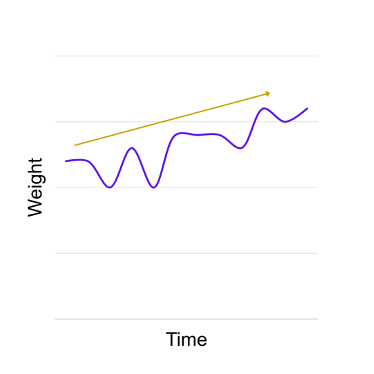
Weight cycling resulting in overall increase over time
Body composition
Each time weight is lost and regained, there are two significant changes that can happen to the different tissues that make up your body. Firstly, the proportion of muscle in the body goes down, and the proportion of body fat goes up. This is important as muscle tissue is better at using up energy, so increasing the amount of muscle tissue can make weight loss easier. The second important change is that regained fat tends to accumulate more around the organs and abdomen rather than under the skin, which can have a more negative impact on our health.
Inflammation
Fat tissue around the organs and abdomen is known as ‘visceral fat’, and this type of body fat contributes more to overall levels of inflammation. This means that when more fat accumulates around the tummy, there are higher risk of developing obesity-related health conditions. To exaggerate this effect even more, studies show that once fat is lost, it is even more inflammatory when regained. This is due to the role fat tissue plays in activating certain cells in the immune system.
Heart health
Every time there is a significant change in body weight, the body works to adjust its blood pressure and heart rate to ensure that the heart is pumping enough to meet the body's needs. These adjustments can cause additional stress to the heart and blood vessels in the body (known as the cardiovascular system), and if this happens repeatedly (as seen in weight cycling), this can increase the risks of the person going on to develop problems with their heart health. Studies have even suggested that these risks are higher in those who have a yo-yo pattern of weight loss and regain than in those with static overweight or obesity.
Insulin
Insulin is a specific signalling molecule (hormone) that is produced in the body when we eat foods containing sugars, which provide energy. Insulin signals for the body to either use up the sugar or to store it so that it can be used later, with the aim of keeping blood sugar levels within a stable range. Having more body fat, particularly around the abdomen, means that the body is less sensitive to insulin. Over time, reduced sensitivity to insulin can lead to blood sugars becoming erratic. This can lead to food cravings and increased appetite, as well as problems with the way some of the body’s organs work.
Mental well-being - Studies show that those who undergo yo-yoing weight loss and regain are more likely to have anxiety, depression and other mental health problems.
How to stop the cycle and make long-term changes
So, we can see that yo-yo dieting and weight cycling affect many of us and that there are lots of reasons why it happens. Studies show that these patterns can be as harmful to our well-being as overweight and obesity, and in some areas are associated with even more health risks.
The first step in breaking this cycle is recognising whether it’s something that’s affecting you. Knowing that when you lose weight, there may come a point where your body starts working against you, and your motivation dips, can help you plan for long-term change. These effects don’t last forever, and there are treatments and supports that can help you make sustainable progress. Taking a long-term view and making small, positive lifestyle changes over time, with a robust support network, can be more effective than crash diets, massive calorie deficits or extreme workouts.
Key messages
Losing weight is hard work. Whichever way you go about it, weight loss requires a change in your daily routine and habits. This requires thought and energy in a world where we are often already spinning multiple plates, and adequate support is essential. Putting weight back on after working hard to get it off is frustrating and demoralising, but understanding what is happening in weight loss and regain and why it happens can help us to break a vicious cycle and achieve long-lasting wellbeing.
- Yo-yo dieting is a common pattern seen in weight loss and often leads to an overall increase in body weight
- Weight cycling can be as harmful as static obesity and can cause greater stress on heart health
- After the initial weight loss, there are changes in your body which can make it harder to keep losing weight
- The key to long-term weight loss and healthy weight maintenance is making smaller changes and keeping consistent over time
- Effective ongoing support is essential
Disclaimer: This article relates to adults and is for general information only and does not replace personalised medical advice. If you’re considering treatment, please contact our care team.