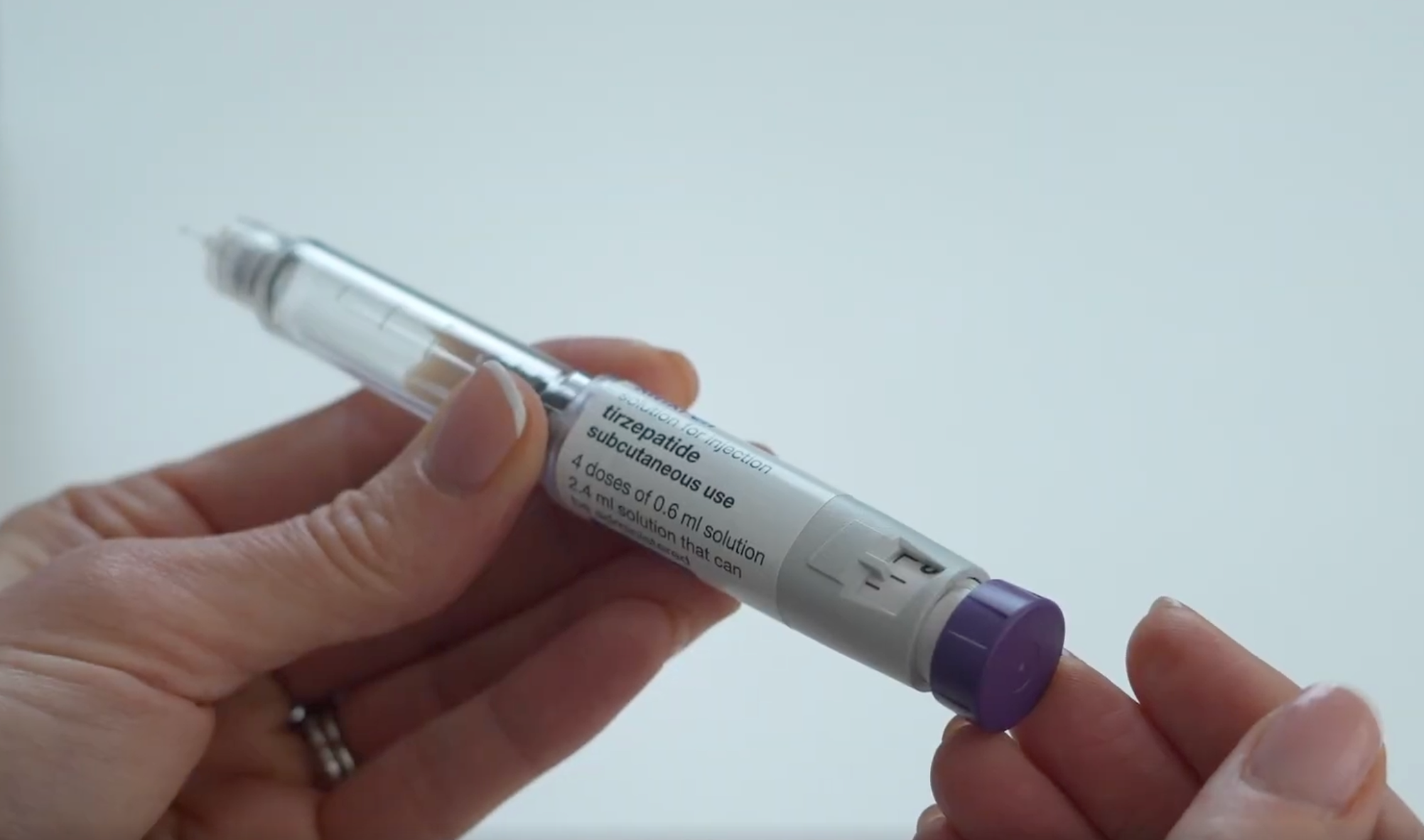


Mounjaro is a weight loss injection containing a GLP-1 medication called tirzepatide. It can help people with overweight or obesity lose weight by increasing feelings of fullness after eating and reducing feelings of hunger and cravings. In this article, we’ll look at Mounjaro in more detail: what it is and how it’s used.
Mounjaro contains tirzepatide
Tirzepatide is a dual GIP/GLP-1 receptor agonist. This means it mimics the action of two hormones:
- GIP (Glucose-dependent Insulinotropic Polypeptide), and
- GLP-1 (Glucagon Like Peptide-1)
These two hormones are released in the body every time we eat to help regulate appetite and manage blood glucose levels.
By mimicking these natural hormones, tirzepatide can increase feelings of fullness after eating, reduce appetite and reduce cravings. This allows people to more easily eat a healthy, balanced diet that supports weight loss.
What is Mounjaro used for?
Mounjaro is used for weight management – including weight loss and weight maintenance– in people who have overweight or obesity. Overweight and obesity are defined using the body mass index, or BMI.
There are some criteria that people must meet before they can use Mounjaro. This can differ between providers; for example, the NHS will prescribe to people with higher BMIs and additional weight-related conditions.
At Genwell, we aim to provide an inclusive weight management programme, and so we will consider the following groups for treatment:
- Adults with a BMI of 30 kg/m2 or more
- Adults with a BMI of 25–30 kg/m2 if they have at least one weight-related health problem (eg, high blood pressure, high cholesterol) or if they are from a higher-risk ethnic group, or if they have not been able to lose weight by any other method previously. See here for details of higher-risk ethnic groups and here for a full list of weight-related conditions.
A healthcare professional will only prescribe Mounjaro if it is appropriate for the individual, after considering all relevant information. An additional consultation with a doctor may be needed to assess suitability for treatment.
Mounjaro is also used for the management of type 2 diabetes in adults, alongside diet and exercise changes. But this is not included in the Genwell weight care programme.
In this article, we’ll be focusing on the use of Mounjaro for weight management.
Mounjaro can help people lose ~20% of their bodyweight
In clinical studies of Mounjaro for weight management, different doses of Mounjaro were given for 72 or 84 weeks. People in the studies followed a reduced-calorie diet and increased their exercise levels.
The results showed, for people taking a 10 mg or 15 mg dose:
- An average weight loss of ~20% of body weight
- Equivalent to 20kg (3st 2lb) loss in someone starting at 100kg (15st 10lb)
Remember, this is an average weight loss; some people lost more weight, and some people lost less weight.
How is Mounjaro given?
Mounjaro is given as a subcutaneous injection – this means it is an injection delivered just below the surface of the skin (not deep into the muscles, and not into a vein):
- It is given in the tummy, thigh or upper arm
- It is self-injected and is provided in a pre-filled injector pen to make injecting as easy as possible
- It is taken once every week, on the same day each week
What dose of Mounjaro is given?
There are six doses of Mounjaro available: 2.5 mg, 5 mg, 7.5 mg, 10 mg, 12.5 mg and 15 mg. Each dose is given weekly.
The starting dose is 2.5 mg; this low dose, alongside lifestyle changes, may be an effective dose for some people to lose weight, however some will need to increase to the next dose level, or higher, to achieve their weight loss goals.
Each dose is given for at least four weeks before it is increased, allowing the body to adapt to the medication and help any digestive system side effects settle.
The original clinical studies defined the maintenance (long-term) doses as 5mg, 10mg or 15mg, or the highest dose that patients could take without having unmanageable side effects. However, for some, the dose they need to reach their goals and maintain their weight may actually be the lowest dose of 2.5mg.
But at Genwell, we know that not everyone will need to keep increasing the dose of their medication to the highest levels to achieve their goals. We follow a structured, doctor-led dosing plan that is designed to support effective, sustainable weight loss while minimising side effects. You can see details of the Genwell dosing plan here.
If you are following the Genwell dosing plan, you won’t need to reassess every month unless something needs to change. At the same time, your care remains flexible - your doctor can review and adjust your dose based on how you’re responding, and you can request changes whenever you need to.
What our clinical experts say
At Genwell, a person-centred approach means you are never pushed to increase your Mounjaro dose. We move at the pace that you and your body feel comfortable with.
Dr Caroline Butler
Is Mounjaro safe to use?
Overall, Mounjaro is generally considered safe to use, but as with all medicines, there will be cases where it should not be used, and that is why a consultation with a healthcare professional is essential before starting treatment.
Even if Mounjaro is suitable for a person to use, it doesn’t mean it will necessarily be free from side effects.
Side effects of the digestive system – such as nausea, diarrhoea and vomiting – are some of the most commonly reported and can affect more than 1 in 10 people, but not everyone will get them.
These side effects tend to occur more often when first starting treatment or when increasing the dose, but they usually decrease over time. This is why the dose of Mounjaro is started low and increased gradually, so that the body can adapt to the medicine.
There are other side effects that may occur, including other common side effects and some serious side effects. You can find out more information about these from the Mounjaro patient leaflet or your healthcare professional.
Anyone experiencing side effects should speak to their healthcare professional.
What our clinical experts say
Many people worry about side effects such as the loss of muscle mass, hair loss or a change in facial shape when using weight loss medication. These aren't actually problems specific to using GLP-1 medications, but to any cause of rapid weight loss. That’s why at Genwell, we focus on high-quality, steady weight loss rather than achieving rapid results at high doses. We support our clients to include strength training, adequate dietary protein, and encourage monitoring of muscle and bone mass throughout your journey, so you can be confident that your health is optimised while using weight loss medication.
Dr Caroline Butler
Key messages
- Mounjaro contains a dual GIP/GLP-1 receptor agonist, called tirzepatide, that works by:
- Increasing feelings of fullness after eating
- Reducing appetite
- Reducing cravings
- Improving blood sugar control
- It has been shown in clinical studies to help people with overweight or obesity lose weight.
- Mounjaro will not be suitable for everyone, and careful assessment by a healthcare professional is needed before prescribing. Together with ongoing support to manage dosing changes and possible side effects, it is essential.
Genwell Reflections
Genwell offers a GP-led weight loss support programme to help you achieve your weight loss goals.
With our personalised, holistic approach, your GP will work with you to identify the right treatment path for you, and your wellbeing coach will support you every step of the way.